Private LLMs & On-Premise AI

    Private AI. On your hardware.

    Put open models to work on your proprietary knowledge and specialized workflows. Astra Applications helps businesses in Fort Wayne, Northeast Indiana and beyond select, configure and deploy private AI on hardware they control—from a dedicated workstation to an internal server.

    Rows of open server racks with network cables and green status lights in a dimly lit room

    Illustrative server environment. Photo by Taylor Vick / Unsplash photo page (opens in a new tab).

    What is a private LLM system?

    A private LLM system runs a language model with the documents, permissions and workflow rules your organization approves. Existing trained open models are the usual starting point. It is not training a foundation model from scratch.

    Potential workflows

    Built for work you cannot hand to a public tool.

    Specialty medical operations

    Assemble a referral or intake packet checklist, identify missing administrative documents and draft a handoff note for staff.

    Human review: Staff review every packet. The system does not diagnose, recommend treatment or act on its own.

    Proprietary technical knowledge

    Answer staff questions from approved SOPs, equipment manuals and internal methods, with a link to each source.

    Human review: Designed to flag missing evidence and route unsupported questions to a person.

    Confidential document work

    Extract agreed fields from contracts, research files or operational records and draft internal reports.

    Human review: A person reviews extracted fields and drafts before anything is saved to another system.

    Example workflow

    Answers with sources, and a person in the loop.

    How a specialty practice or technical team might see results: each item points to its source, missing evidence is flagged and nothing moves forward until staff review it.

    Illustrative example with synthetic material. This is not a working AI demo or a real client or patient record.

    Approved sources
    • Referral letter (synthetic)REF-001
    • Insurance card scan (synthetic)INS-002
    • Practice intake checklistSOP-INTAKE-4

    New-patient referral packet: administrative checklist

    Needs staff review
    • Referral letter received and datedSource: REF-001, p.1
    • Insurance details presentSource: INS-002
    • MissingPrior imaging report not found in packetSource: SOP-INTAKE-4, item 6
    • Draft handoff: request imaging report from referring office before schedulingSource: SOP-INTAKE-4, item 9

    Administrative only. No diagnosis or treatment recommendation.

    How it works

    Your knowledge. A system your team can use.

    Retrieval

    Search approved documents at answer time

    The system finds relevant passages in the documents you approve, respects who is allowed to see them and shows source references with each answer. Adding documents updates what it can find; it does not retrain the model, and it does not eliminate errors.

    Optional fine-tuning

    Adapt behavior from approved examples

    When testing shows retrieval alone is not enough, a model can be adapted to your formats and phrasing using approved examples. We recommend it only when evaluation justifies the extra effort.

    Workflow integration

    Structured outputs with human approval

    Outputs can follow a set structure, pass validation checks and wait for a person to approve them before anything is written to another system.

    Architecture

    How the pieces fit inside your boundary.

    Your organization

    Approved knowledge

    • SOPs and manuals
    • Forms and records
    • Permissions

    Your hardware

    • Open model
    • Document index
    • Access rules

    Staff

    • Ask and review
    • Approve outputs

    Reviewed output

    Outside the boundary: external services are used only if you approve them.

    Illustrative architecture. A private AI system on hardware your organization controls.
    Hardware paths

    Sized to the work, tested before you buy.

    A bounded pilot

    Dedicated workstation

    One machine for a small group testing a specific workflow before wider investment.

    Shared team workloads

    Internal GPU server

    A server on your network that several staff use for agreed workflows.

    Only where the scope justifies it

    Multiple servers or a restricted network

    Larger or segregated deployments for higher availability or stricter network separation.

    What drives hardware sizing

    • The model and its precision
    • Document and context length
    • How many people use it at once
    • Response speed you need
    • Availability expectations

    We benchmark real, representative tasks before you purchase equipment. Hardware you already own may work after an assessment.

    When running equipment on site is not the right fit, a private cloud deployment can be an alternative. We compare the options with you.

    What you receive

    What Astra implements.

    • Workflow and data-boundary map
    • Model, runtime and license evaluation
    • Hardware sizing, installation and configuration
    • Local document parsing, embeddings, index and retrieval, as scoped
    • Sign-in and role-based access
    • Integrations and review controls
    • Testing on representative tasks and failure cases
    • Documented workflows and an admin runbook
    • Trained users and agreed measurements
    • Update, backup and recovery plan

    Optional: ongoing maintenance, model evaluation and improvement. Pricing and timing are scoped after discovery. Hardware, licenses and ongoing infrastructure or support are priced separately unless your proposal expressly includes them.

    A doctor in a white coat typing at a desktop computer in an office

    Illustrative medical-office setting. Photo by Vitaly Gariev / Unsplash photo page (opens in a new tab).

    Privacy, honestly

    Private by configuration, not by label.

    Local inference can keep processing on hardware you own when the whole pipeline is configured that way.

    Offline operation is possible with a deliberately configured and tested deployment, local dependencies and a maintenance and update procedure.

    We review each of these

    • External connectors
    • Cloud fallback
    • OCR and embedding services
    • Logs and telemetry
    • Backups
    • Remote support access
    • Software and model updates
    Delivery

    Four steps, measured together.

    1. 01

      Discovery

      We map the workflow, the documents involved, who needs access and where data must stay.

    2. 02

      Scoped pilot

      We benchmark representative tasks on candidate models and hardware, then run a bounded pilot with your staff.

    3. 03

      Rollout

      We install, configure access, connect agreed systems, train users and hand over the runbook.

    4. 04

      Optional improvement

      Ongoing maintenance, model evaluation and improvement if you want continued support.

    Measures we agree on with you

    • Task accuracy and source fidelity
    • Staff review effort
    • Response time under expected use
    • Operating cost

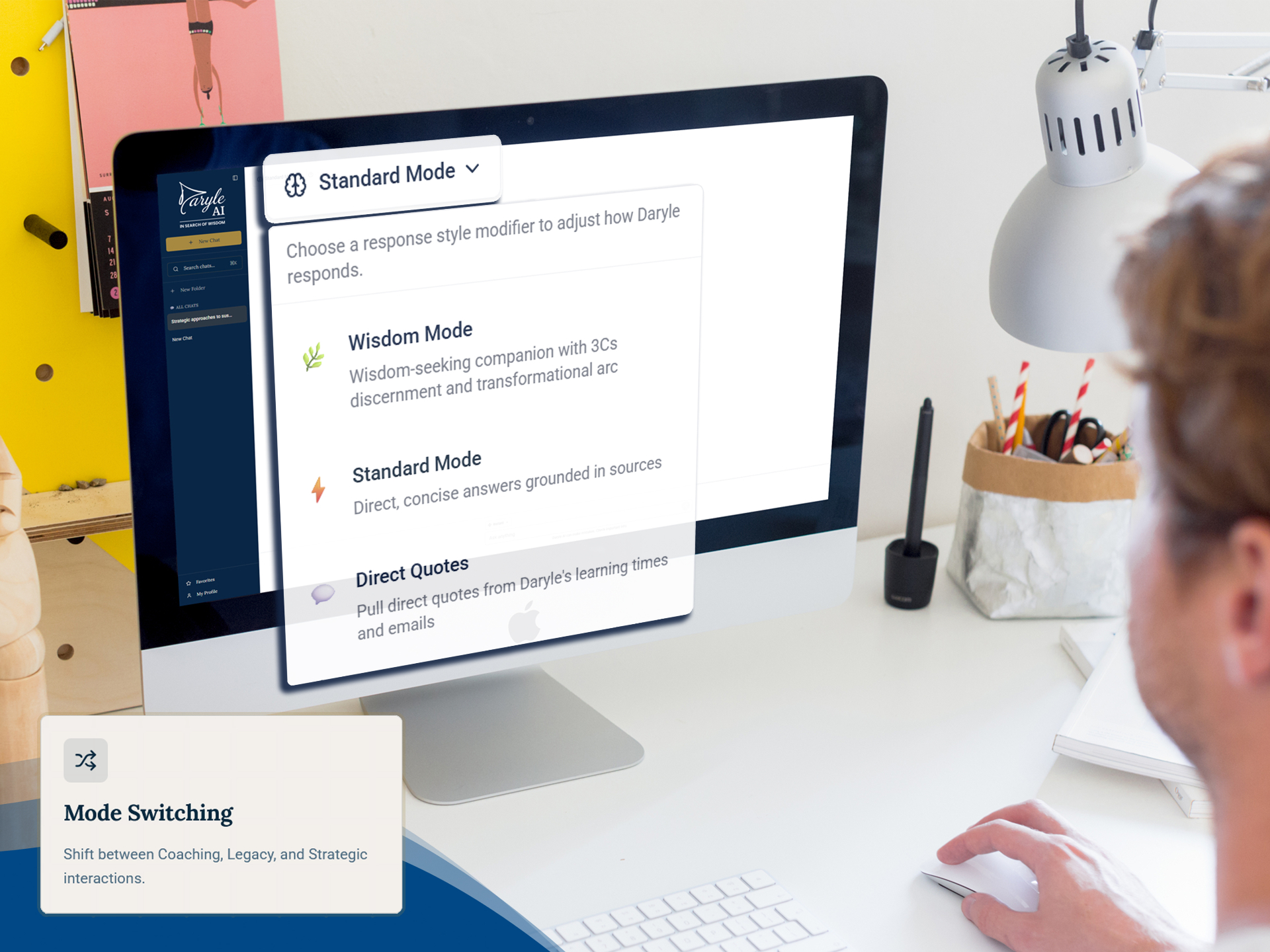
    Related work: Daryle.AI case study. See also AI Development and AI Knowledge Assistants.

    Daryle.AI contextual conversation grounded in founder content

    Daryle.AI. Related custom AI work: a retrieval-based knowledge system that answers from the founder's content. It shows our custom AI experience; it is not an on-premises or medical deployment.

    Common questions

    Private AI questions, answered plainly.

    Can we run a private LLM on hardware we already own?

    Sometimes. After an assessment we test representative tasks on your existing equipment. If it handles the model, document sizes and number of users you need, you may not need new hardware. If not, we recommend what to add before you buy anything.

    What is the difference between open source and open weights, and can we use them commercially?

    Many models publish downloadable weights under a license, but that does not automatically make them fully open source or free for every commercial use. Licenses vary between providers and between releases from the same provider. We review the specific release and its license for your intended use before recommending it.

    Do we need to train a new model?

    Usually not. Existing trained open models are the normal starting point. Most projects combine one with retrieval over your approved documents. Fine-tuning on approved examples is optional, and training a foundation model from scratch is not part of our standard offer.

    Can it run fully offline?

    It can, when the deployment is deliberately configured and tested that way. That means local copies of the model and supporting software, no cloud-dependent features and a planned procedure for updates and maintenance.

    Is this a fit for a specialty medical practice?

    It can support administrative and research tasks, starting with synthetic or appropriately de-identified pilot material. Clinical professionals review anything that could influence patient care. Running on local hardware does not by itself make a system HIPAA compliant, so we work with your IT and compliance team on access, audit, encryption, retention, risk assessment and any required agreements before protected health information is involved.

    Will our data leave our network?

    Processing can stay on your hardware when the whole pipeline is configured that way. We review external connectors, cloud fallback, OCR or embedding services, logs, telemetry, backups, remote support and software updates, and document which ones are enabled.

    Can a private model still make mistakes?

    Yes. Private and open models can produce incorrect or unsupported answers. We design for that with source references, a clear not-found response when evidence is missing, testing on realistic tasks and staff review before outputs are used or saved.

    Can it connect to our existing systems?

    Yes, as scoped. We can build integrations and custom software so outputs reach the systems your team already uses, with validation and human approval before anything is written.

    What does it cost and how long does it take?

    Pricing and timing are scoped after discovery because they depend on the workflow, documents, users and hardware. Hardware, software licenses and ongoing infrastructure or support are priced separately unless your proposal expressly includes them. Ongoing maintenance and improvement are optional.

    Technical references

    Product names are examples, not endorsements. These references inform our approach; they are not Astra certifications.

    Private AI, on hardware you control.

    Serving Fort Wayne, Northeast Indiana and beyond. Tell us about the workflow, and we will tell you plainly whether a private deployment fits.